Skin Tag Removal on the Eyelids: Is It Safe?
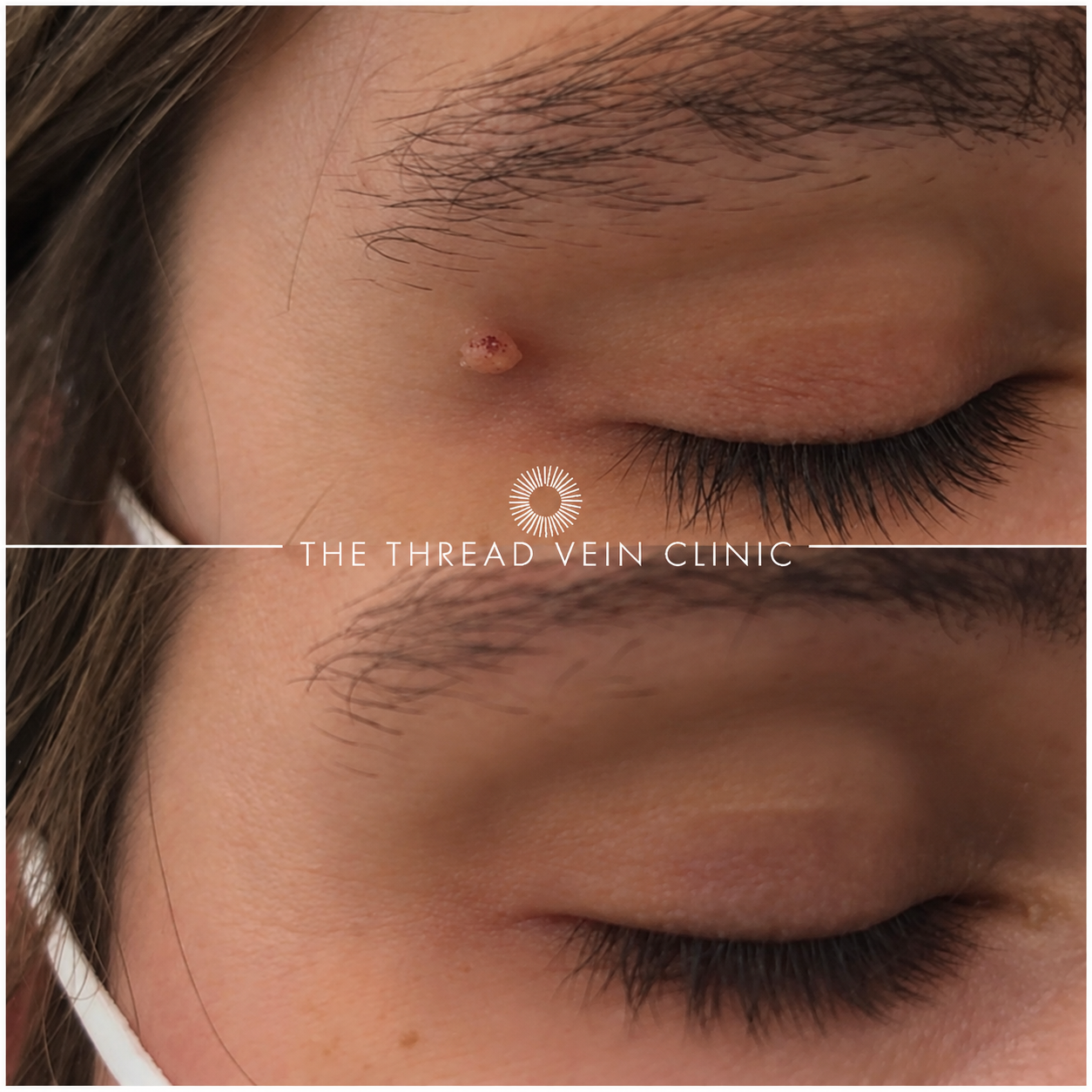
A skin tag on the eyelid can be small yet surprisingly distracting. It may catch when you wash your face, sit in your line of sight or make you feel self-conscious. Because the skin around the eyes is thin and delicate, it is understandable to ask whether eyelid skin tag removal is safe. A correctly identified skin tag can often be removed safely by an appropriately qualified clinician, but the area requires careful assessment, the right technique and proper protection of the eye.
This guide explains what eyelid skin tags look like, why diagnosis matters, what professional removal may involve and why home treatment near the eye is particularly risky.
What is an eyelid skin tag?
A skin tag, medically known as an acrochordon, is a common benign skin growth. It is usually soft, flesh-coloured or slightly darker than the surrounding skin and often hangs from a narrow stalk. Skin tags contain loose collagen fibres and small blood vessels covered by skin. They are not usually painful or harmful.
Skin tags commonly develop in folds or areas of friction. Although the eyelid may not seem like an obvious skin fold, the skin moves constantly when we blink, smile and rub our eyes. Tags may appear on the upper or lower lid or close to the surrounding eye area.
An eyelid skin tag may remain tiny for years. Others slowly become more noticeable or start catching during cleansing and make-up application. Irritation can occasionally make one sore or cause slight bleeding. That does not necessarily mean it is dangerous, but any bleeding or change should be assessed rather than assumed to be harmless.
Is every eyelid lump a skin tag?
No. “Eyelid lump” describes many different conditions. A bump may be a skin tag, wart, cyst, chalazion, seborrhoeic keratosis, mole or another benign lesion. Less commonly, a persistent or changing eyelid lesion can be a skin cancer. The eyelids receive substantial sun exposure and the area can be overlooked when sunscreen is applied.
A typical skin tag is soft and often attached by a small stalk. A wart tends to be firmer and may have a rough surface. A chalazion is usually a deeper, rounded swelling caused by a blocked oil gland rather than a growth hanging from the skin. These descriptions are helpful but cannot replace examination by a clinician.
Correct diagnosis is especially important around the eye because some removal methods destroy tissue. If there is any uncertainty, a clinician may recommend a different assessment or a method that preserves tissue for laboratory analysis. An undiagnosed lesion should not simply be frozen or burned.
When should an eyelid lesion be checked promptly?
Seek professional advice if the lesion is growing or spreading, repeatedly bleeding, painful, ulcerated, changing colour or shape, or affecting your sight. Changes to the eyelashes, the edge of the lid or the way the eyelid closes also warrant assessment. A lesion that repeatedly returns after treatment, does not heal or looks distinctly different from your other marks should not be ignored.
These features do not prove that a lesion is serious. Many benign eyelid conditions can become inflamed or irritated. They do, however, mean that diagnosis should come before cosmetic treatment. If a clinician is concerned, they may refer you to a dermatologist, ophthalmologist or oculoplastic specialist.
Is eyelid skin tag removal safe?
Professional removal can be safe when the lesion has been assessed, the clinician is trained to work in the area around the eye and the selected method is appropriate for its exact location. The eyelid is not an area for casual treatment. The skin is thin, the eye must be protected and even a small amount of swelling can feel dramatic.
Safety depends on more than the technique. Your clinician should consider how close the tag is to the lash line or eye surface, its size and blood supply, your skin type, your tendency to scar or develop pigment changes, and any medicines or health conditions that affect bleeding or healing.
A tag on the surrounding eyelid skin is different from a lesion on the lid margin, where the eyelashes emerge, or on the moist inner surface of the lid. Lesions very close to the eye may be better managed by an eye specialist. A responsible clinic will explain when treatment is within its scope and when referral is safer.
How are eyelid skin tags removed professionally?
The recommended method varies. Common treatments for confirmed skin tags include careful snip excision, controlled heat or electrosurgery, and cryotherapy. This does not mean every method is suitable for every eyelid lesion.
Careful excision
A small tag with a defined stalk may sometimes be removed using sterile surgical instruments. Local or topical anaesthesia may be used depending on the lesion and setting. The clinician controls the point of removal and manages any bleeding. If the diagnosis is uncertain, excision may allow tissue to be sent for histology.
Electrosurgery or controlled heat
Electrosurgical methods use controlled energy to treat tissue and may help seal small blood vessels. They require appropriate training and meticulous protection near the eye. The practitioner should explain the method, the expected wound and the risk of pigment change or scarring.
Cryotherapy
Cryotherapy freezes tissue, commonly with liquid nitrogen. It is used for several benign skin lesions, including some skin tags, but treatment around the eye can cause noticeable eyelid swelling. Freezing is not suitable for an undiagnosed lesion or where tissue needs to be examined. Technique, skin type and proximity to the eye all matter.
The fact that a treatment is routinely used elsewhere on the body does not automatically make it the best option for an eyelid. The safest decision is individual and should follow an in-person assessment.
What happens during an appointment?
Your appointment should begin with a history and examination. You may be asked how long the growth has been present, whether it has changed, whether it affects vision or lid movement and whether it bleeds or catches. Tell the clinician about eye conditions, allergies, previous scarring problems and medicines, particularly blood-thinning medication.
Do not stop prescribed medicines unless the clinician responsible for them advises you to do so. If treatment is suitable, the procedure and alternatives should be explained along with the expected result, aftercare and possible complications. You should have an opportunity to ask questions before consenting.
Small benign lesions may be treated in an outpatient setting. Some eyelid procedures use local anaesthetic so the patient remains awake while the area is numb. More complex lesions may require a specialist surgical environment. The exact process available at The Thread Vein Clinic must be confirmed during clinical review before this article is published.
Does eyelid skin tag removal hurt?
Sensation varies with the method, tag and anaesthetic used. A local anaesthetic injection can briefly sting. Freezing can produce a sharp cold or stinging sensation. Patients may notice tenderness afterwards, but severe or increasing pain is not expected and should be reported.
The eye area can swell easily. Even treatment beside the eye may lead to a puffy eyelid, particularly the following morning. Bruising is also possible. Your clinician should tell you what degree of swelling is normal and what symptoms require advice.
What are the risks?
No skin procedure is risk-free. Possible effects include discomfort, bleeding, swelling, bruising, infection, delayed healing, a small scar and changes in skin colour. Hyperpigmentation or hypopigmentation can be particularly important for black or brown skin, and pigment change can occasionally persist.
Near the eye there are additional considerations: accidental injury to the eye, irritation from treatment products, changes close to the lash line and swelling that temporarily affects vision. These are key reasons to choose a clinician with appropriate experience and to avoid home treatment.
Sometimes a lesion is not completely removed or another tag develops nearby. A removed skin tag does not usually grow back in the same place, but new tags can appear because the underlying tendency remains.
Why should you never remove an eyelid skin tag at home?
Cutting, tying, burning or freezing a lesion beside your eye is unsafe. Home products can spread beyond the tiny target area. Acids or freezing agents may injure the eyelid or eye surface. Scissors and blades can cause uncontrolled bleeding, infection and scarring. Tying a tag may create prolonged inflammation and still fail to remove it.
There is also the diagnostic risk. If the growth is a wart, mole, cyst or something requiring investigation, destroying it at home can delay appropriate care. Never use an online removal product near the eye unless an appropriately qualified clinician has specifically instructed you to do so.
Eyelid skin tag removal aftercare
Follow the personalised instructions provided by your clinician. You may be advised to keep the area clean, avoid rubbing, and use a specific ointment. Do not apply make-up, active skincare products or unapproved creams to a fresh wound. Avoid picking at a scab, as this can increase infection, pigment change and scarring.
Temporary swelling or bruising may make driving unsuitable immediately after some procedures, especially if an eye pad is used or vision is affected. Plan transport according to the clinic’s advice. Protect the healing area from the sun once your clinician says it is safe to do so.
Contact the treating clinic if redness is spreading, pain or swelling is increasing rather than settling, there is pus-like discharge, bleeding will not stop or your vision changes. Urgent eye symptoms require prompt medical attention.
Frequently asked questions
Can a skin tag affect eyesight?
A small tag on the outer skin usually does not affect the eye itself. A larger lesion may sit in the line of sight, rub the eye or interfere with lid movement. Any visual effect needs specialist assessment.
Can an optician diagnose an eyelid skin tag?
An optometrist can assess many eye and eyelid concerns and advise on referral. Removal should be performed only by an appropriately qualified professional working within their competence.
Will removal leave a scar?
Any procedure can leave a mark. Many small lesions heal discreetly, but the outcome depends on the method, location, skin type and individual healing. Your clinician should discuss this before treatment.
Can skin tags grow on the lash line?
Lesions can occur close to the lid margin, but several other eyelid growths may look similar. Because the lashes and eye surface are nearby, assessment by a clinician experienced in eyelid lesions is important.
How soon can I wear eye make-up?
This depends on the treatment and healing. Wait until the wound has closed and follow the treating clinician’s advice. Applying make-up too soon can irritate the area or introduce infection.
Arrange a professional assessment
If you have a suspected skin tag on or near the eyelid, begin with a proper diagnosis. The Thread Vein Clinic can assess whether the lesion appears suitable for treatment within the clinic.
A consultation at either of our London or Kent clinics, gives you the opportunity to discuss irritation, appearance and any effect on your vision, as well as realistic outcomes and aftercare. Never attempt eyelid skin tag removal yourself.
Book a consultation today.
